The Manatons of Manaton, South Hill
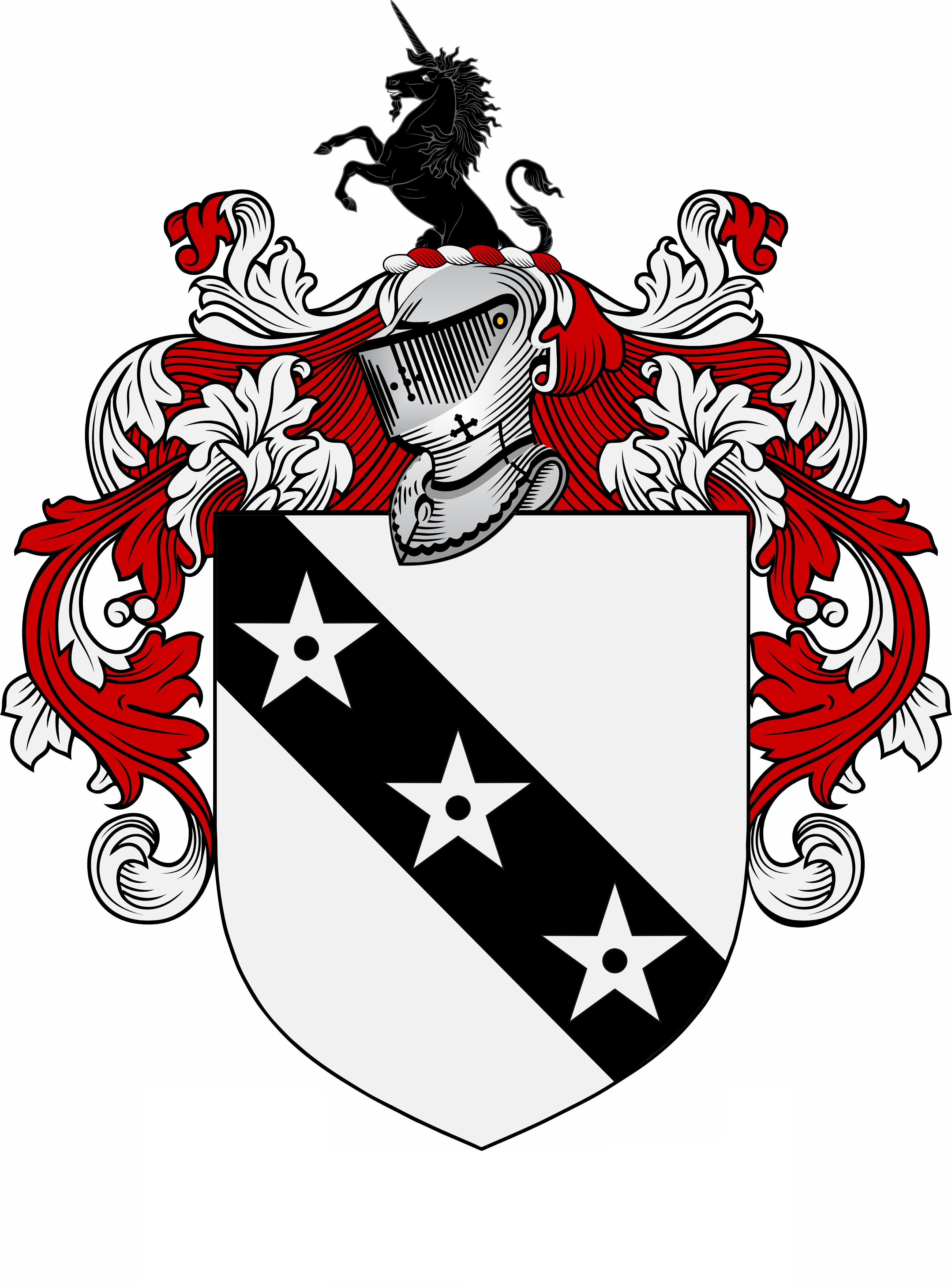 It is believed that the Manatons arrived in South Hill from Manaton on the Dartmoor in Devon which is the origin of their surname. The first record of the Manaton family in the vicinity of St. Sampson’s is Richard de Manaton in 1185. Richard de Manaton and his descendants acquired additional lands adjacent to St. Sampson’s which are still known today as Lower Manaton and Higher Manaton. This was the family seat, and the stone gate at the entrance to the manor can be seen from South Hill Road.
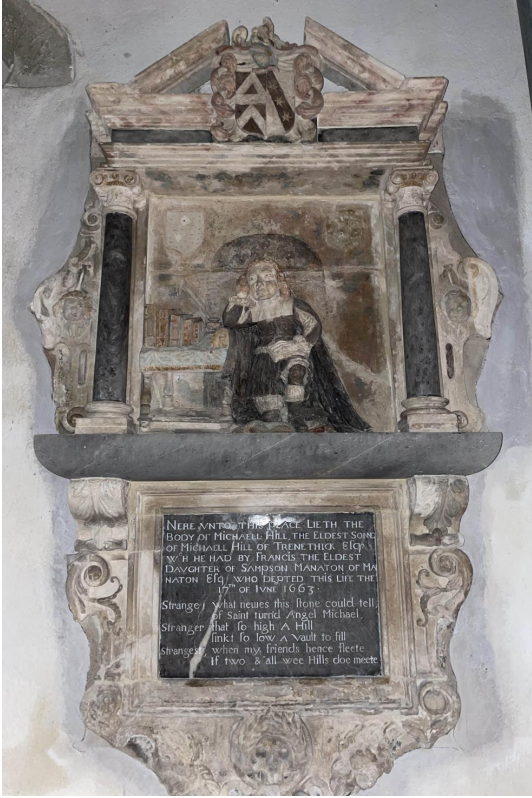
By the 15th century the north transept of St. Sampson’s church was being utilized by the Manatons as a private chapel. This space in the church building continues to be known as the Manaton Chapel. The Manatons worshipped inside the chapel, left floor and wall monuments, and they interred the remains of family members in burial vaults beneath the floor. Burials may have begun as early as c.1500. However, the first documentary evidence of this practice is in 1663. In the Manaton Chapel there is a family monument to Michael Hill (1655-1663). His wall monument (now protected by a wooden box during renovation construction) bears inscriptions: “Near unto this place Lieth the Body of Michael Hill…who dep’ted this lie the 17th of June, 1663.” And a verse in the inscription reads, “Stranger that so high a Hill sinks so low A Vault to fill.”
The wills left by family members are an important source of information on the burials and identify specific persons who are likely buried in the vault. In particular, there are three generations who requested burial in the church in their wills.
In her will dated 1709, Elizabeth Manaton (c. 1625-1716/7) commits her “body to Christian Buryall in the Parish Church of Southill” at the direction of her executor. ACC 1717 AP M 1843. Elizabeth was one of four daughters and co-heiresses. She married her cousin Arthur Manaton, and they retained possession of the Manaton estates. Michael Hill remembered by the wall monument was nephew to Elizabeth Manaton.
Elizabeth’s executor was her son Francis Manaton (c. 1663-1735). Francis requested that his body be “privately interred in my aisle in the parish church of Southill in the said County [Cornwall] amongst my ancestors.” PCC PROB 11/678/113. This choice of words implies that family burials had been taking place for some time before Francis. During his lifetime, Francis was an attorney, acting as the Recorder at Camelford and a tax collector for the land tax. Francis ordered the reconstruction of the stone gate at the entrance to Manaton Manor.
Sampson Manaton (1692/3-1737) was the eldest surviving son of Francis Manaton. He also requested burial in the church in his will. “I order my body to be buried in Manaton Aisle in Southill Church in the County of Cornwall.” PCC PROB 11/689/153. Sampson died without heirs and he left his estate to his Manaton cousins living in Tavistock who were buried there. It is probable that Sampson may have been the last Manaton to be interred in the vaults.
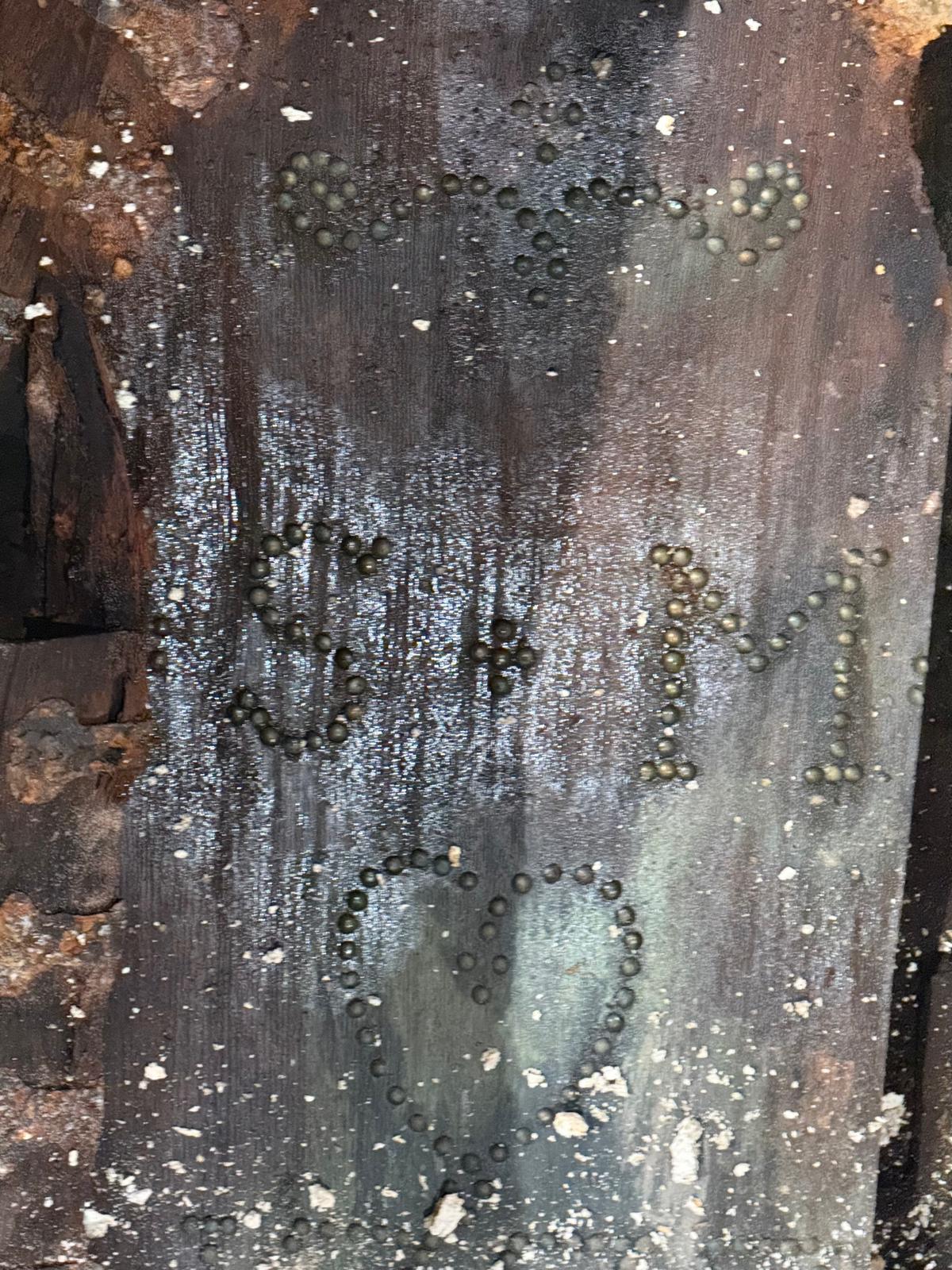
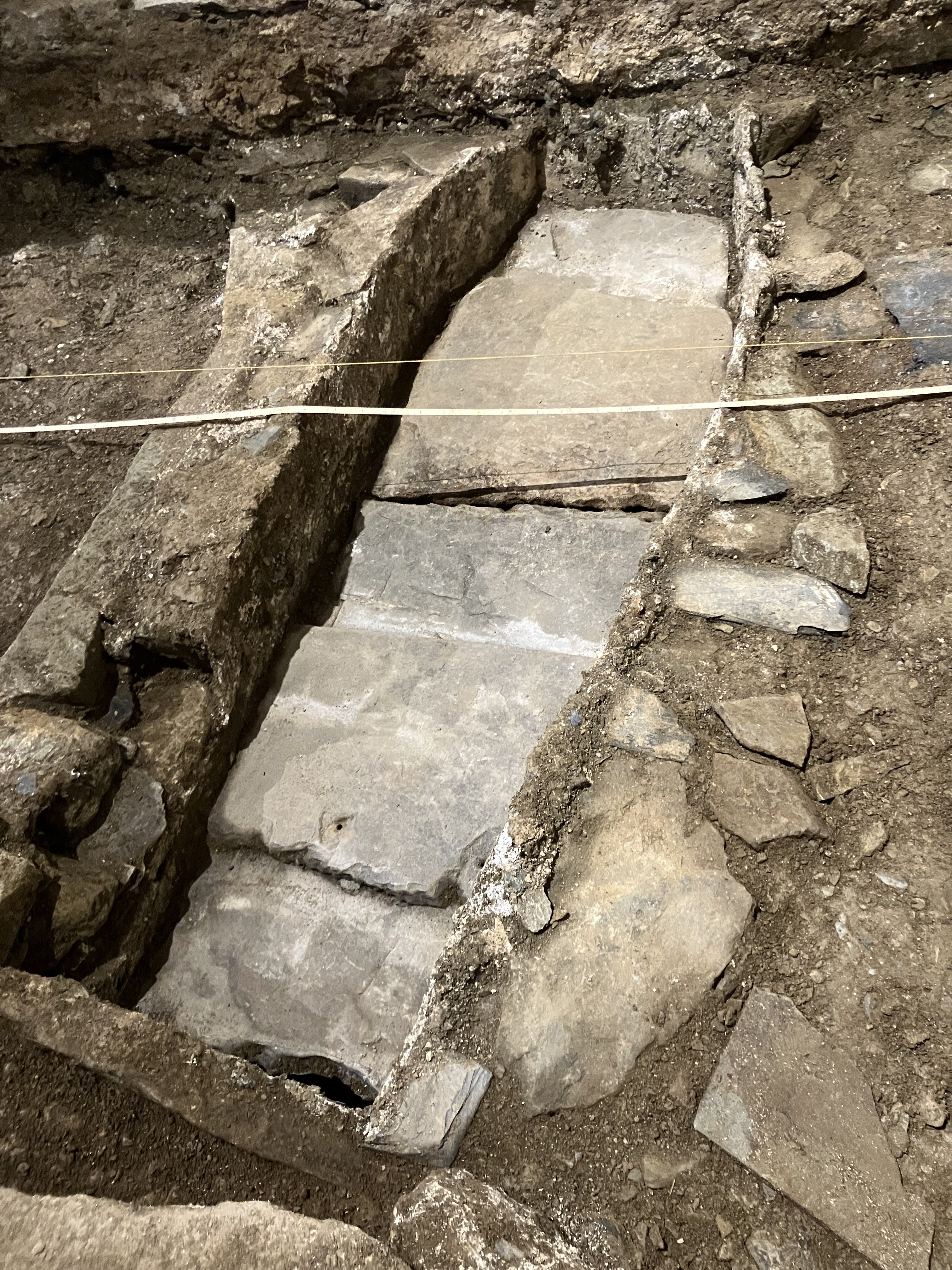
Sampson Manaton - Vault and coffin discovered in January 2026
Manaton ancestors remains unearthed at St Sampson's | Tavistock Times Gazette
Manaton ancestors remains unearthed at St Sampson's
By Sarah Martin
Thursday 16th October 2025 11:10 am
DNA will now be used to determine if the remains are ancestors of Mike Manaton, who has been researching his family links at South Hill.Archaeological excavations at St Sampson's Church in South Hill near Callington have unearthed what is believed to be ancestors of the Manaton family - who originated on Dartmoor – in their family chapel. (Sarah Martin)
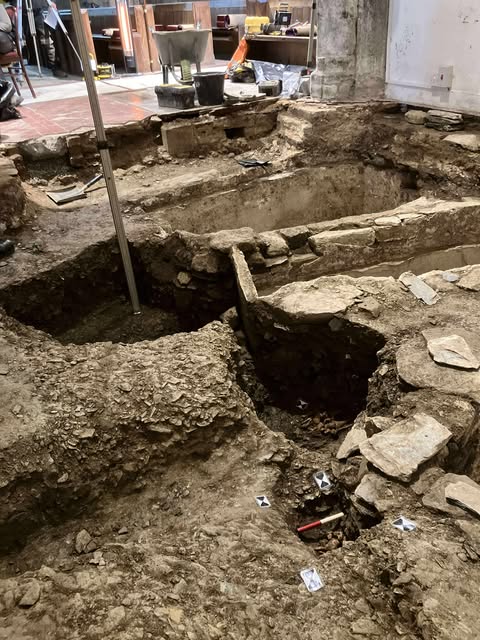
Major ongoing works to restore a local church have unearthed ancestral bones dating back over hundreds of years. Work to turn a side chapel into a warm, communal space has unearthed remains of what are thought to be descendants of the Manaton family, local ‘Lords of the Manor’ dating back between 300 and 500 years old.
Set in the rolling countryside of South East Cornwall, the church sits within the parish of South Hill, near Callington. Significant restoration has been taking place on the Grade I listed church which has recently been awarded £200,000 of funding from the National Lottery Heritage Fund.
The discovery of two skeletons unearthed during the renovation work prompted an open day at the church attended by more than 50 people who came to view the two single and double vault that contained the the historical remains. Work will now continue to match the DNA and provide facial reconstruction of the remains
It’s not uncommon to find bones when undertaking church restorations as churches were used as burial grounds for centuries, Judith Ayers, churchwarden of St Sampson’s Church explains. The difference is that the skeletons unearthed at St Sampson are probably direct ancestors of a member of the Manaton family who travelled back from Dallas, Texas to watch events unfold.
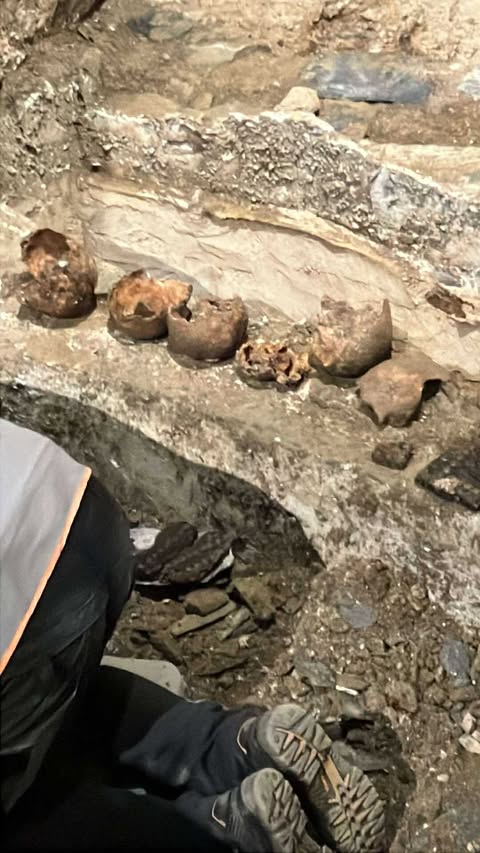
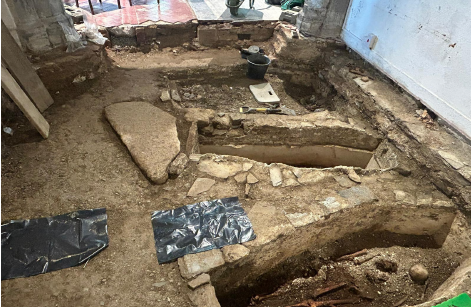
Work to install underfloor heating was the ideal opportunity to see if in fact Manaton ancestors had indeed been buried here.
Mike Manaton has been investigating the history of his family since taking up the mantle from his father. He comes from a junior line of the family that left for the Americas in 1833. He has been crossing the Atlantic repeatedly since 2007 to piece together the history of his ancestors in South Hill. As soon as he was notified that skeletons had indeed been uncovered, he once again hopped on a plane.“The earliest records that we have of the family in this vicinity date back to 1185. And at that point in time, we believe that the family came from Dartmoor and took their name from Manaton on Dartmoor. And they acquired some church lands that belonged to Lanson [Launceston] priory,” said Mike.
“We think by probably about the late 15th century that achieved a level of influence here locally that they appropriated the use of the north transept here in the church as a private family chapel,” added Mike.
We were well aware that we were likely to find old remains because of Mike’s research and history and all the documentation and the wills, so it wasn’t a surprise to us,” added Judith who is the helping to lead the restoration on the church.Mike explained: “The burial vaults and, and the family burials really were kind of a recent discovery in the scheme of things. There were clues, but we didn't connect the dots until maybe two years ago.”
A monument on the wall within the Manaton chapel that was restored as part of conservation work between 2021 and 2023 played tribute to a young boy, Michael Hill. The inscription on the memorial was faded but the restoration work gave clues that he was buried within the chapel: ‘Nere unto this place lieth the body of Michael Hill… who departed this life the 17th June 1633’.
“I always thought that was just a literary reference,” added Mike. “Then going back and looking through family wills, there were specific instructions among three of the family members that they wanted to be buried inside the church in their aisle.
“I started doing a little bit of research and learned about the practice of burying inside the church. That evidence combined with the ledger stone gave us good reason to believe that there may be a burial vault here.”
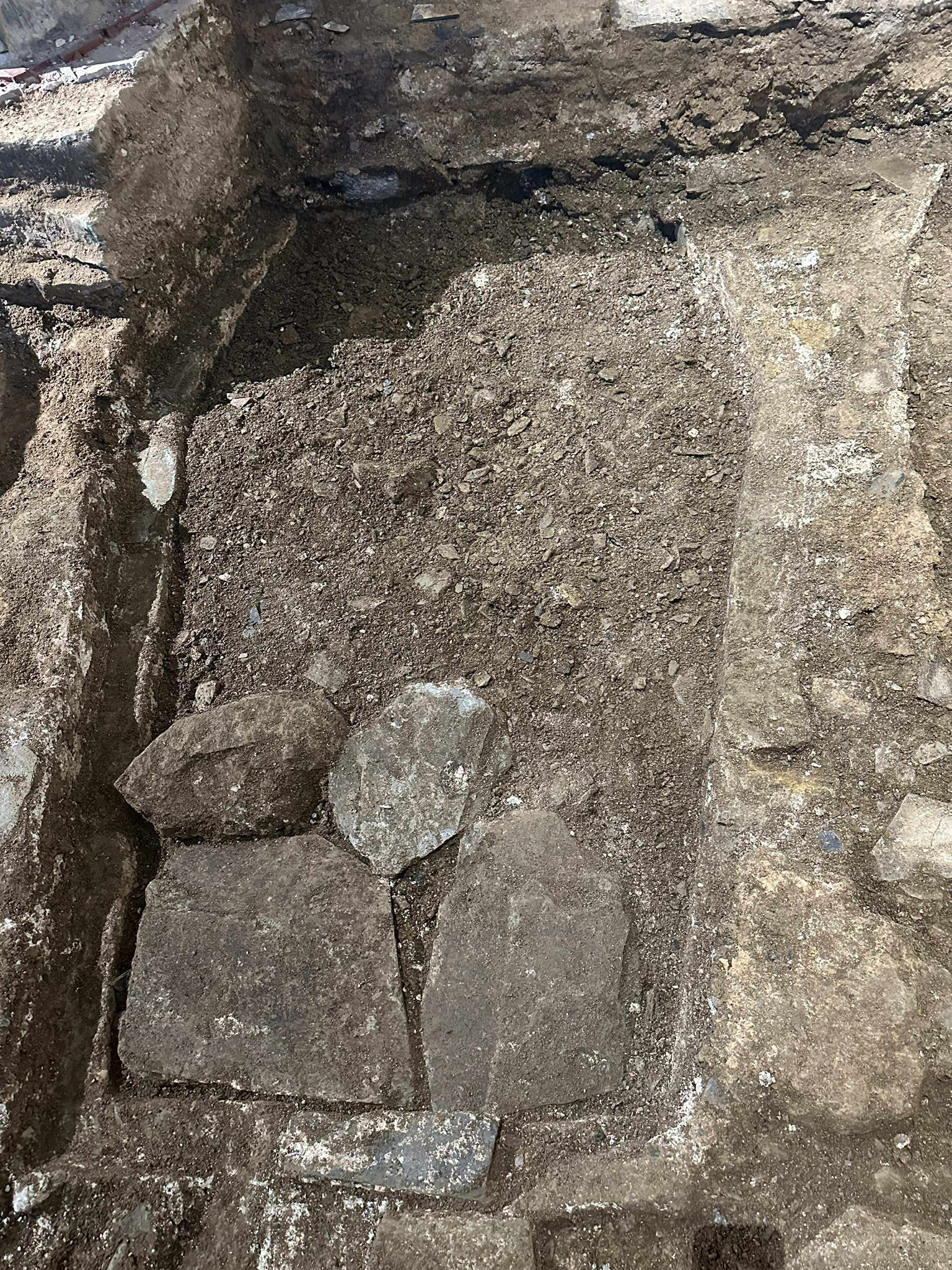
Two complete skeletons were unearthed in two smaller vaults while a larger vault contained a selection of bones probably from previous burials.
The last recorded burial would have been 1737, adds Mike, but could have been as early as 1500 based on a mysterious ledger stone that is still missing but recorded in antiquarians’ histories.
“We have a candidate list of the people who were here, but we also didn't know if in the intervening 300 years during construction or restoration it had been discovered and cleaned out.“After they had removed about a foot and a half-ish of soil, then we could see the outline of the brick and mortar vaults. So that was very exciting.
The skeletal remains have been removed for DNA analysis with the hope of establishing their identity and will be reburied under the new floor in the chapel.
As they gradually dug down through the layers, the archaeologist uncovered three tombs and an earth burial site. Two fully intact skeletons were found and a large amount of disarticulated remains, which is common in church burials. Previous bones dug up to allow for a later burial would have been put back in on top and reburied, adds Judith.
The discovery of the skeletons will take Mike one step closer to to piece together the Manaton family history. He joined his father’s in his endeavours and they began researching together, recovering the details of their history that had been lost since they journeyed to the Americas.
His first visit to the site was in 2007 and the unanswered questions have been drawing him back ever since. “We also got extremely fortunate in 2014. A professional genealogist, unprompted, took an interest in the family and did the research and published a book on the history of our family. “I call it the family Bible,” said Mike.
Works on the Manaton chapel are to provide a comfortable warm space for communal use in the church with underfloor heating and a glass screen.
Mike’s father passed away shortly after Mike became involved in the work at South Hill. Mike said he would have been kicking himself about the discovery. “After that first visit, we had dinner together and I showed him the pictures we had. It was a nice evening and a chance for us to talk about all the things that had been done and you know, piece things together and see the pictures.”
Three days later his father passed away. It was the last conversation they had together and it remains Mike’s motivation to continue the work being undertaken today. But more than that, Mike over the years has become a cherished member of the St Sampson church congregation.
He said: “That has been a remarkable gift and is I’ve had the chance to become part of the community here, and the church community is amazing. It’s a sense of belonging above and beyond anything I would have expected.”